
To understand how we have got to where we are with SVA and BIVA, we really need to understand where the legislators who dreamed all this up were coming from. In the end it all comes down to safety, with a touch of identity thrown in for consumer protection along the way.
Type Approval was introduced across Western Europe in the 1970s as part of an effort to ensure the car buyers’ safety by the fledgling EU (known then as the EEC for those who can remember that far back). As it was originally envisaged Type Approval would have, from 1977, banned any modifications at all and had it not been for the work of Rodders and the fledgling kit car industry that resulted in a consultation period, that led to the introduction of SVA, who knows where we would actually be now?
Over the years new regulations have been added as technology and the car buying public’s expectations - with regards to safety - have grown. The Type Approval regulations mean that if, for example, you have a standard 1985 Vauxhall Cavalier, you would know that it complied with the safety regulations in force at the time the car was originally manufactured. So long as the car is in good condition (which is where the MoT test comes in) it can be considered safe. Not as safe as a modern car, but by buying a 25 year old car you make that choice and you know what sort of safety standards you’re buying into.
The problem starts when you change the car from the manufacturer’s specifications. Type Approval can no longer guarantee that the car is safe. Suppose the owner of our Cavalier happens to have cut a crucial part of the bodyshell in order to fit a Jaguar V12 into it. The car might be in good condition, it could quite easily pass an MoT test, since the test is not looking at the engineering of the modifications, but it can no longer really be considered safe.
As the car no longer complies with the Type Approval for the Cavalier, logically it can no longer be regarded as being a Cavalier, on the basis that all Cavaliers comply to TA, so if this car does not comply to TA it is no longer a Cavalier. As the vehicle type is now in question, so the identity of the car is called into question – it may be registered as a 1985 Vauxhall Cavalier, but can no longer be regarded as such – thus removing the right to the 1985 Vauxhall Cavalier logbook.
The other side to the loss of identity, which applies to cars not type-approved originally, as well as those that were, is the issue of buyer protection. If you were to buy a 1985 Cavalier, or for that matter a 1960 Austin A40, then the average man in the street (1) would expect it to be as safe as a 1985 Cavalier (or a 1960 A40). However, that can no longer be proven by its identity since its been modified since. In order to prevent a foolish person from expecting the car to be as safe as a 1985 Cavalier, the original 1985 identity needs to be removed.
Since the car no longer has an identity, it can be regarded as a new, un-registered car. Under the TA legislation, in order to register that new, un-registered car, it needs to comply with Type Approval. Type Approval is a horrendously complex and expensive procedure that the manufacturer of a car has to pay for. The cost and requirements of TA are way out of the range of a man-in-a-shed, leaving our hero’s ‘Cavalier’ languishing on a trailer on its way to a show.

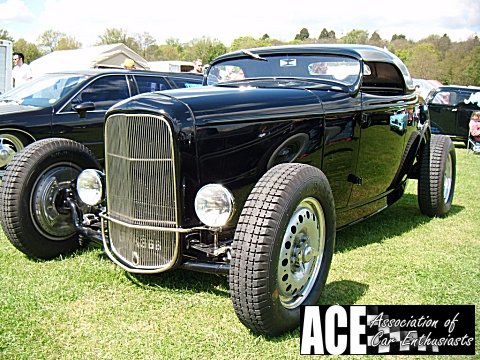
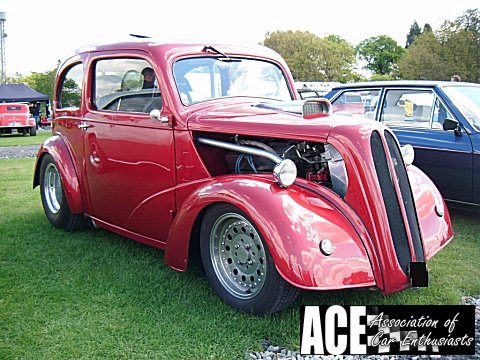
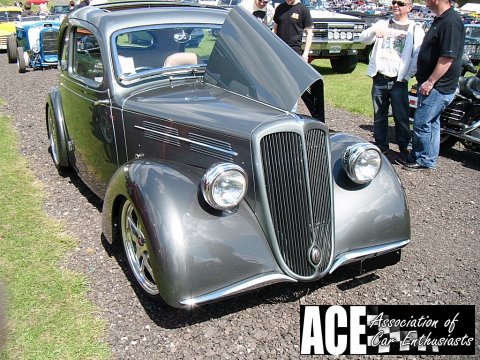
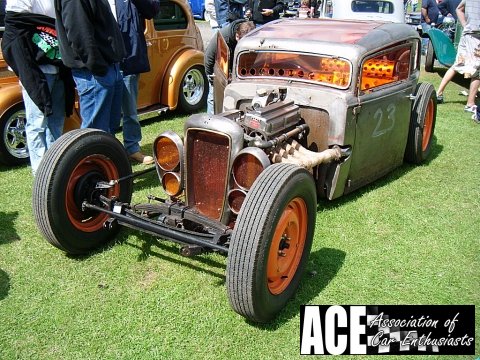
TA legislation allows countries to introduce their own method of bypassing the legislation in certain cases - imports, radically altered, amateur-built etc. This is where the SVA and latterly the BIVA, come into play. Passing SVA or BIVA gives the car a Minister’s Approval Certificate (MAC) - consider it to be Type Approval LiteTM. A MAC allows the new, un-registered ‘Cavalier’ to be registered, either with an age-related plate or a Q plate (depending on the circumstances - in this case it’s most likely to be a Q plate) but it will not be allowed to be registered as a Cavalier, as proprietary names are not allowed under SVA/BIVA.
The SVA/BIVA covers the major points of the Type Approval requirements, but at a significantly lower level and with a much lower requirement for documentary proof. For example, Type Approval probably requires independent testing done to ensure that the petrol tank on a car won’t dissolve in petrol, while the BIVA merely requires that the tank be made of metal. The BIVA also inspects the structure of a car in order to assess its strength and crash-worthiness, highlighting the weakness where the ‘Cav’ was chopped to fit the V12. The inspection avoids the need to crash-test our hero’s pride and joy, which would otherwise be a Type Approval requirement.
The central questions that the above labyrinth revolve around are the following:
• To consider when a vehicle ceases to be the original vehicle.
• To consider whether vehicles which have been radically altered from their original specification, require type approval. This may involve changes to legislation.
This is where it gets messy - the UK has had to develop its own system within the TA legislation to identify those cars required to undertake BIVA. The result is the unholy mess that is the points system, which left grey areas regarding what constituted a modified monocoque.
The DVLA statement clarifying the law regarding modified monocoques (and modified chassis) means that we now understand that it’s altering the structure of a car that is the issue, rather than modification per se. This means that our hero now knows what he can and can’t legally do to his car and, what the requirements are if he steps over that line.
Seriously chopping a bulkhead in order to fit a bigger engine will significantly affect the strength of the car - thus removing its Type Approval, etc., etc. With respect to the tunnel issue, if you follow the letter of the (un-clarified) points system then your car will be eligible for a BIVA. The ‘per-car’ basis was purely due to the lack of clear guidance - you would have had a postcode lottery, whereby one DVLA office would pass your car while another would shred your V5C. It would be better to know what the test had in store without having to find out beforehand whether Reg, at DVLA Neasden, is off on holiday tomorrow, or whether he’s just been made bankrupt and had a divorce.
While BIVA-ing every car with an engine and gearbox swap that requires some relieving seems excessive, that is the fault of the legislation, not ACE or the DVLA’s interpretation of it. It is also madness that you can fit a V8 to a completely standard Morris Minor legally (2), while a sensibly modified version might not be legal, seems insane. However, the legislators only considered the identity of the vehicle and, if you only make changes within the points system it’s still the same car.
The fact that people have been getting away with it for years is - as has been commented - due to the difficulty of tracking every car’s details throughout the years and DVLA’s failure to adequately publicise the existence of the points system. Despite this, there were a few blatant cases that were caught - like tax-exempt-registered Land Rover Defenders. However, the advance of computer technology and the computerised MoT in particular, means that tracking the details of every car is now much easier.
Footnotes
(1) The average man in the street is considered to know nothing about any particular subject - I.e. knows about as much about cars as does David Cameron.
(2) Arguably you could be prosecuted for driving an unsafe vehicle under the construction and use regulations if you drove a V8-engined drum-braked Minor on the road.
Share